
16th Digital Symposium presented as a Sweet 16-themed party
By Angelina Dobbs
Florida State University’s Johnston Digital Studio hosted the 16th-annual Digital Symposium on April 1, 2025. The event featured scores of exemplary digital compositions, created by undergraduate and graduate students from across a range of academic majors.
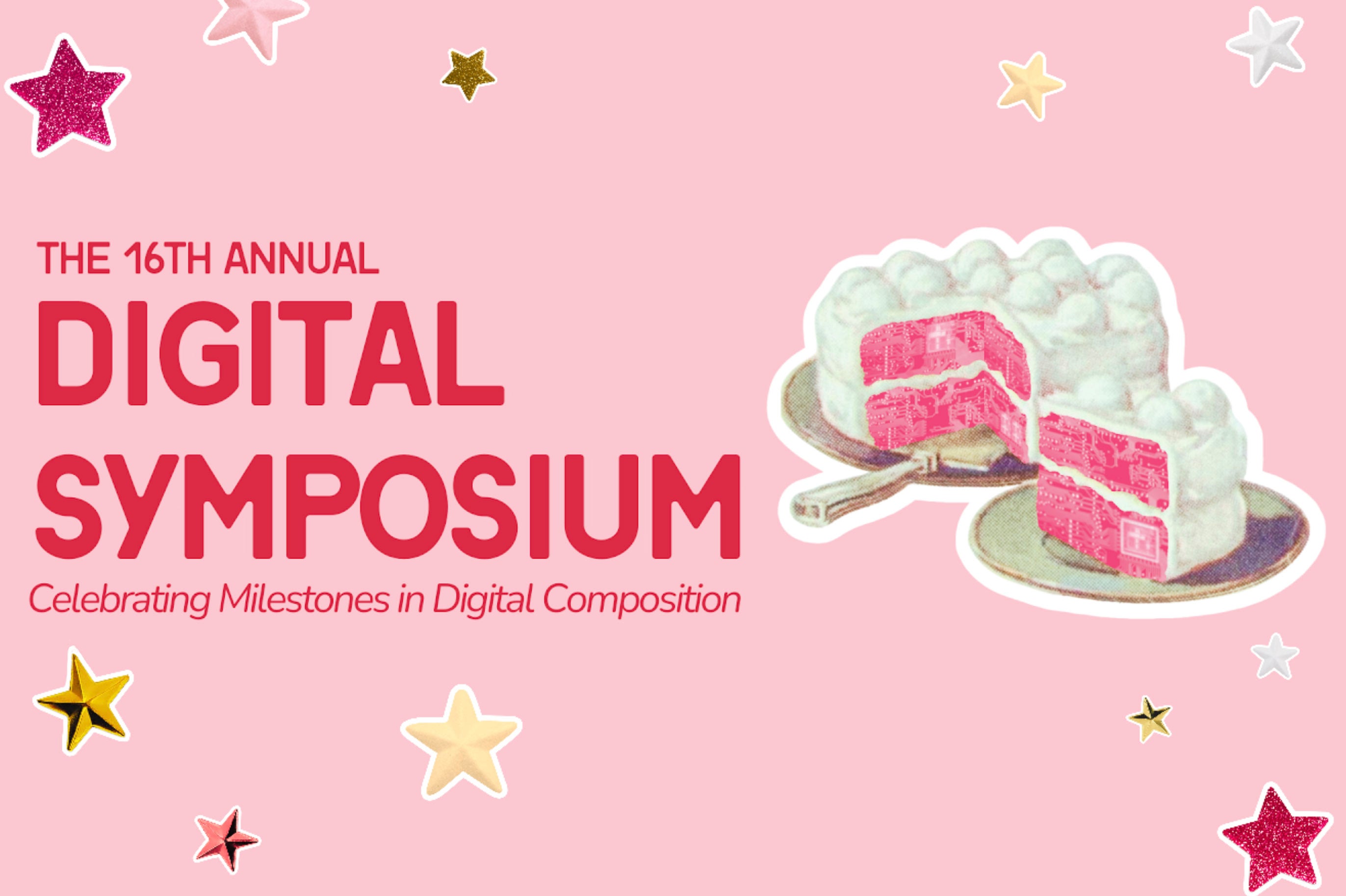
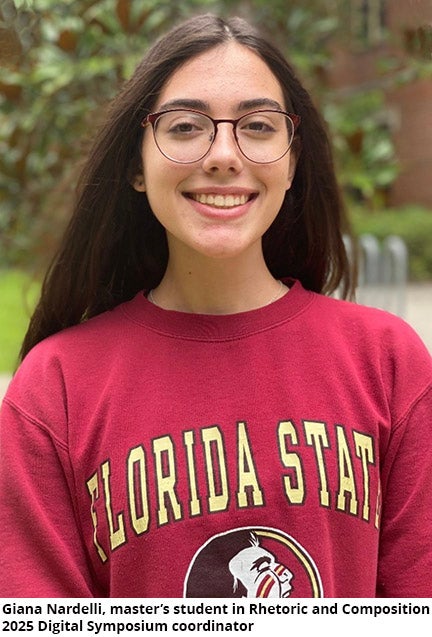
The coordinator for this year’s event, Giana Nardelli, a second-year master’s student in the Rhetoric and Composition Program, chose the theme “Celebrating Milestones in Digital Composing” to celebrate the symposium with a “Sweet 16th birthday” party.
 “These projects show what students in English courses can do besides just write papers,” Nardelli said, smiling to match the lively activity in the Digital Studio. “We create and we compose.”
The symposium’s atmosphere was open and inviting, ripe with intellectual curiosity and enthusiasm. A little over a year in the making, the first in-person presentation since the pandemic did not disappoint.
Birthdays represent milestones, Nardelli explained, and she designed the symposium as a space to visit and recognize FSU students’ accomplishments in digital literacy.
“A lot of times, technological spaces are so fast paced, they don’t give you the time to do that,” she added. “In the Reading-Writing Center and the Digital Studio, with English and composition, we have that affordance.”
Because sweet 16 birthdays are milestones for many girls, Nardelli also wanted this year’s projects to embrace femininity in technology.
“If you go back in history, women are in technology everywhere but just hidden,” Nardelli said.
She and other students who work in the Digital Studio transformed the environment into a birthday party scene, a vision in pink with rainbow streamers, colorful balloons, and, of course, a Funfetti birthday cake.
 Typical of birthday parties, visitors could sign a guestbook, which displayed this year’s digital symposium logo. Ezekiel Greenwood, a first-year master’s student in the Literature, Media, and Culture Program who works in the Digital Studio, and Nardelli envisioned the design’s rough draft.
Nardelli wanted to create a cake with digital elements for the logo, and she and Greenwood tossed around some ideas while working together one day in the studio.
“Zeke suggested a motherboard computer chip,” Nardelli said. “They then tied that suggestion into the pink and feminine aspects of the theme as ‘motherboard,’ which plays on a popular Gen-Z term associating ‘mother’ with a woman who is admirable or does something impressive or noteworthy.”
Greenwood was one of several hard-working graduate and undergraduate student Digital Studio staff members who inspired different aspects of the event and endeavored to make this year's symposium memorable.
“The staff of the digital studio this year has been phenomenal,” Nardelli said.
The event included a lunch hour with pizza and birthday cake and a craft hour for visitors to relax, chat, and make personalized, beaded bracelets to take home.
Kamila Albert, the Reading-Writing Center director and Johnston Digital Studio coordinator, proposed the bracelet-making activity. Her idea stemmed from an activity called “Sparkleponies” that took place at a Conference on College Composition and Communication she attended. Sparkleponies are miniature bejeweled horses painted with glitter that conferencegoers could create and win at the conference.
Similarly, the symposium’s activity helped break the ice and allow people the chance to mingle.
“We wanted to designate a time in the middle of the day just to relax and invite people to hang out and talk to each other,” Nardelli said.
These moments of relaxation and conversation were sprinkled among the main event: the presentations.
Requirements for the symposium specified that projects needed to be digital and had to be created within a course offered in the English department. With these parameters, students exceeded expectations, Nardelli said.
Faculty members and graduate teaching assistants nominated students from their classes, and others interested in sharing their work self-submitted their works. The symposium digital space comprises a total of 70 thought-provoking and engaging projects on critical issues that were significant or meaningful to the students.
Thirteen of those students took the next step to present their projects in the studio, demonstrating the versatility of the skills they learned in their English courses.
Olivia Klimek, a junior double majoring in English-Editing, Writing, and Media and media/communication studies, was one of the presenters. Her project focused on the victimization of women in environments where they can be subject to inappropriate exploitation, such as on the sets of reality TV shows.
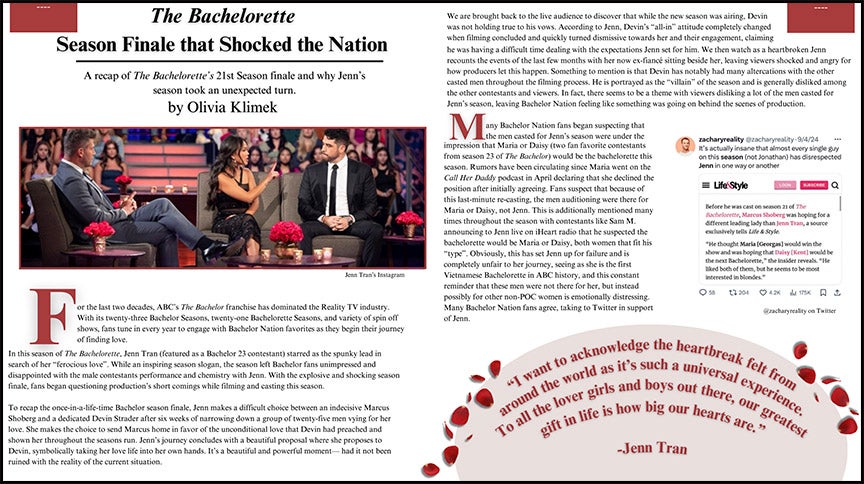 Through a case study of Jenn Tran, the first Vietnamese and Asian American lead in the history of The Bachelorette, Klimek detailed the emotional abuse, shame, and humiliation Tran faced from both the producers and the male contestants on the set of Season 21 in 2024.
In her project (click the image for the full project), Klimek also explained issues in the casting process that overlooked past domestic violence allegations against one male contestant and past sexual assault allegations against a second contestant.
Klimek’s said her presentation served as a call for action to prioritize the emotional well-being and security for contestants in productions like The Bachelorette, which expend their mental health and safety for views and ratings.
“The digital symposium was a really cool opportunity to share my project and some of the things I’ve learned from creating them in my time at FSU,” Klimek said.
Doctoral candidate in Rhetoric and Composition Lauren Reilly nominated Klimek based on an assignment that asked students to emulate the design of a famous magazine. Klimek adapted this project for her portfolio in preparation for her future professional opportunities.
“This was a fun way to explore my skill set and learn different applications that I normally wouldn’t have, like Adobe InDesign,” Klimek said.
During her presentation, Klimek explained her argument and design choices, while fielding questions from her inquisitive audience. After her 45-minute window, Nardelli recognized Klimek’s hard work with a certificate of presentation, which was given to all presenters.
The Digital Symposium is not only an opportunity for students to practice their public speaking, learn new platforms, and develop their professional portfolios but also allows them to have fun creating and presenting their projects.
The intentionality and variation within each project truly exemplify the vast well of human creativity at FSU. Additionally, because of the digital composition aspect, those projects submitted to the symposium represent online milestones that will carry us into the future.
Make sure to visit the Digital Symposium website linked above to see all submissions from this year’s event. You can see video discussions with six of the presenters here on the FSU Writing Center & Digital Studio Instagram page. Browse the creations from past symposiums here.
Angelina Dobbs is a double major in English-Editing, Writing, and Media and in neuroscience.
Follow the English department on Instagram; on Facebook; and on X.