
Southeast Review revives its Halloween spirit with annual fundraiser, under this year's theme 'Bramble and Bone'
By Darby Shelton
A haunting tradition is creeping back to The Bark, and it’s bringing tarot cards, literary readings, and, hopefully, a venue teeming with well-decorated pumpkins along with it.
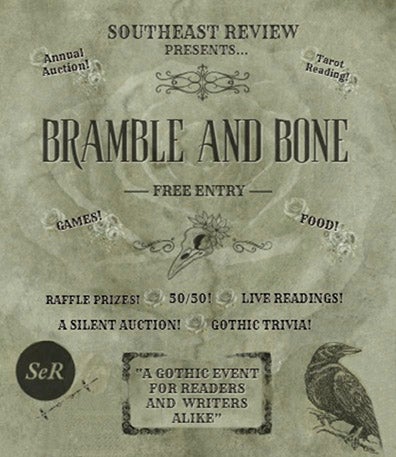
The Southeast Review invites Florida State University students, faculty, and community members to attend “Bramble and Bone,” the literary magazine’s annual Halloween fundraiser, Oct. 27 from 6 to 9 p.m. This year's theme blends gothic literature and landscapes, setting the stage for attendees to participate in a slew of seasonal festivities in support of the graduate student-run national literary magazine housed in FSU’s Department of English.
SER Managing Editor Braulio Fonseca, a third-year doctoral student in English-Creative Writing, is one of the organizers behind this year’s event. A team of undergraduate interns for the magazine turned their ideas into an evening that shines a spotlight on the publication—and gives them plenty of reasons to enjoy the party.
“That was all the interns,” Fonseca says, regarding the theme. “I don’t really give them creative direction.”

The interns developed their own color palette and drew on their shared interest in gothic literature to come up with “Bramble and Bone.” Guests can expect that influence to come to life in the trivia contest, which is filled with questions that explore the genre they initially drew upon.
“We have a great team, and everyone’s been working really hard to gather donations for our silent auction and to help organize other aspects of the fundraiser too,” says intern Emily Harris, a double major in English-Creative Writing and psychology.
One of Harris’ contributions is the evening’s “Blind Date with a Book” sale, inspired after she encountered similar displays in bookstores. Readers can pick out books to purchase based on teasers or clues about their plots, providing a sense of mystery to the buyer’s next read.
For those seeking answers instead, tarot card readings, an SER fundraiser staple, returns to the lineup. The readings have developed a cult-like following, Fonseca says, and their history reflects the close relationships that help make the fundraiser a success.
An everyday conversation led to English Professor Celia Caputi’s longstanding participation in the event.
“What started this tradition was an idle comment I made about reading tarot before or during one of my classes,” Caputi explained for an article about a previous fundraiser. “I think I was responding to a student wearing tarot earrings.”
A student subsequently invited Caputi to donate a reading to the auction, which eventually led to readings being available for purchase at the event itself.
We have a great team, and everyone’s been working really hard to gather donations for our silent auction and to help organize other aspects of the fundraiser, too.
— Emily Harris
Another fundamental aspect of the fundraiser, faculty and graduate student readings, places literature at the center of the celebration, while the silent auction offers its own assortment of discoveries. Planned items include an artistic guitar crafted by English Professor Virgil Suárez, a weeklong stay in Cabo, and tickets to a future event at The Moon, a landmark venue in Tallahassee.
This year features new activities, as well, such as the 50/50 raffle, which awards half the collected money to the winning participant. The pumpkin carving and painting contest is also new this year. Guests are asked to arrive with their pumpkins already decorated, ready to join a display of fellow attendees’ creations.
“Who doesn’t want to see a whole little collection of really rad, artistic pumpkins, you know,” Fonseca says, sharing his enthusiasm for the contest.
For Fonseca, who has founded two nonprofits, the challenges of fundraising are familiar. He says the university’s connection to the Tallahassee community helps open conversations with businesses and alumni willing to contribute.
His journey with SER began with reading submissions for course credit, but he quickly transitioned into the role of lead nonfiction editor. When the managing editor position became available last spring, he saw it as an opportunity to deepen his involvement with the publication.
Donations are pivotal to SER’s programming throughout the year.
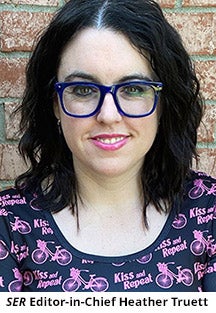
Editor-in-Chief Heather Truett, a doctoral candidate in Creative Writing-Fiction, says “helping us pay our submitters is the biggest thing.” Being a paying market adds a level of professionalism and respect to the publication, she adds.
Donations also help fund the semesterly book club that SER hosts with Gadsden Correctional Facility, a local women's prison. Members of the community who could not attend the fundraiser but want to support the journal can submit donations online.
Fonseca hopes those who attend the fundraiser leave curious about the publication and consider the possibility of being a part of the team.
Being able to see the magazine and meet its staff, he says, could help students recognize “that it’s something that they might want to be a part of in the future.”
Whether guests arrive ready to bid, browse, or put their gothic knowledge to the test, Fonseca has one final request: “Bring your pumpkins.”
Darby Shelton is a double major in English-Creative Writing and information communication technology.
Follow the English department: Instagram; Facebook; LinkedIn; X.