
Six English undergraduates earn Humanities Center fellowships
By Noah Garry
The recently established Florida State University College of Arts and Sciences Humanities Center accepted 15 undergraduate students as part of its fellowship program for the 2026-27 academic year. The appointments offer an opportunity for students to work on academic projects, collaborate with peers in the center, and ultimately present the findings from their research.
Six of the fellows are English majors.
“I was stoked. It says a lot about how cool we are,” says Frances Cushing Ervin Professor of English Aaron Jaffe, who is a member of the advisory board for the Humanities Center.
The English department group includes students from each of the major’s three academic concentrations: Kristen Cavanagh, Lauren Cavanagh, Victoria De Jorio-Koegler, and Larissa Todd, all in Literature, Media, and Culture; Hailey Heseltine, in Editing, Writing, and Media; and Shogo Oviawe, in Creative Writing.
Jaffe describes the students’ roles as “explorers and ambassadors.”
“They'll pursue their own research, help shape programming, and present their work,” he says. “Then I hope they come back and get their classmates fired up.”
The center’s initial call for applicants explained that the fellowship will provide members with workshops and opportunities to collaborate with other undergraduates and Humanities Center faculty members.
“I was inspired to apply because of the center’s commitment to fostering interdisciplinary research, meaningful intellectual conversations, and a greater appreciation for the humanities,” De Jorio-Koegler says.
The students will regularly participate in group discussions with various visiting humanities lecturers and scholars, and they will eventually present their research projects at the annual Undergraduate Humanities Symposium.
“I'm looking forward to opportunities to gain practical experience in presenting my work during the conference in the spring semester,” Heseltine says.
They'll pursue their own research, help shape programming, and present their work. Then I hope they come back and get their classmates fired up.
— Professor Aaron Jaffe
Undergraduate fellows are given a $1,000 stipend to support their research. They are also required to attend Humanities Center lectures, when possible, and to serve as academic ambassadors for the broader field of humanities.
Jaffe credits the students’ faculty mentors for teaching them how to read and write at a high level.
“I have great colleagues,” Jaffe says.
As the academic year progresses, the English students will become more familiar with the Humanities Center, and their participation will help foster a community of like-minded academics in the humanities.
"Students are what make a center feel alive," Jaffe says. “English teaches you to notice things—macro and micro—to connect ideas, to talk about what matters and why, and to figure out the difference between what’s new and what’s just new to you.”
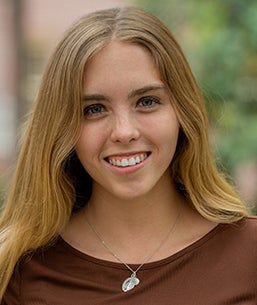 Kristen Cavanagh’s research project is "The Convert as a Rebel: Exploring the English Catholic Literary Revival as a 'Literature of Protest' in the Twentieth Century."
Cavanagh says the center’s emphasis on a tightly knit community encouraged her to apply for the fellowship.
“A lot of fellowships are accomplished from a distance,” she adds. “They can be slightly bureaucratic, assigning excess work that is unproductive work that is unproductive to our research and creativity.”
The center’s array of frequent meetings, including workshops, salons, and group lectures, Cavanagh says, conveys a sense of familiarity, trust, and commitment among the members of the fellowship cohort.
“It is rare that you have a fellowship so tightly knit together while also being relatively hands-off when it comes to monitoring their fellows,” she says.
Cavanagh also stresses the role FSU faculty will have in the fellowship.
“It is not simply our mentors and committees that we rely on; instead, the Humanities Center has created an ecosystem of faculty and students who are invested in what we produce,” Cavanagh says.
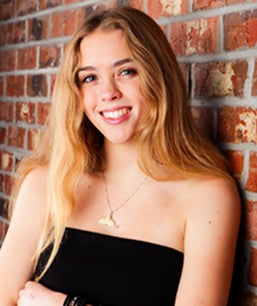
Lauren Cavanagh’s research project is "Ulysses: The Vegetarian Conscience of Leopold Bloom."
Cavanagh was initially hesitant to apply for the fellowship because of other academic responsibilities. After attending an interest meeting with FSU Professor of Religion and History John Corrigan, the Humanities Center’s founding director, Cavanagh was convinced to apply following his pitch of the center as a collaborative community for intellectual and interdisciplinary scholars.
Cavanagh says she felt a sense of connection with the other students at the meeting, describing the intrigue in the room as she discussed her project.
"It was the first time I had found peers who were fascinated by strange concepts, like tracing a vegetarian concept through Ulysses," Cavanagh says. "Having a network of like-minded and intellectually diverse peers is invaluable to me, so I applied with vigor."
Cavanagh’s academic goal with the center is to fine-tune her Honors in the Major thesis, relying on her peers to facilitate ideas that will improve her work.
"I have witnessed how communicative and constructive these people can be,” Cavanagh says. “There is a healthy balance of competition, comparison, and camaraderie. I cannot wait to see how it all blossoms."
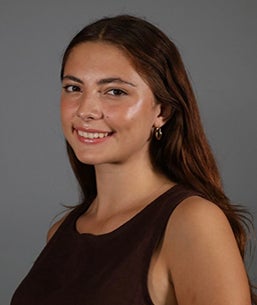
Victoria De Jorio-Koegler’s research project is “The Genealogy of Digital Distraction: Media, Morals, and the Subject.”
In addition to English, De Jorio-Koegler is also majoring in Theatre and Political Science. She applied for the fellowship because of the support the position provides for interdisciplinary research, the ability for significant intellectual collaboration with both students and faculty, and the overall dedication it has to the advancement of the humanities.
“I’m looking forward to participating in discussions with visiting scholars and contributing to a community that celebrates not only the importance of the humanities, but actively cultivates them,” De Jorio-Koegler says.
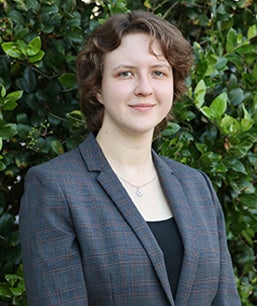
Hailey Heseltine’s research project is “The Shadow Sings: Crywolf's OBLIVIØN and the Sublimity of the Self."
Heseltine says her passion for writing and the creation, interpretation, and experience of art inspired her to apply for the fellowship. Heseltine also stresses the center's emphasis on interdisciplinary scholarship, and she sees an opportunity to support the humanities at a time when they are "often undervalued in both academia and public opinion,” Heseltine says.
In addition to refining her own research and strengthening her confidence as a scholar, Heseltine wants to support her fellow researchers.
"Taking on a research project like a thesis as an undergraduate can be daunting but knowing that I have a group of fellows in similar situations here to support me—and for me to support them—is encouraging," Heseltine says.
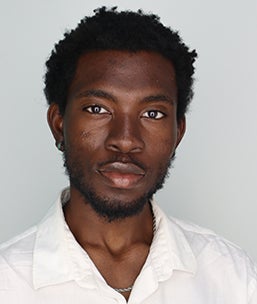
Shogo Oviawe’s research project is "Psyker Patient' and Other Anomalous Adolescents: An Illustrated Exploration of Affected Pubescence."
Oviawe says he learned about the fellowship through two English department faculty members, Associate Professor Ravi Howard and Assistant Professor L. Lamar Wilson. Through those discussions, Oviawe became attracted to the Humanities Center's potential to unite researchers from various disciplines.
As a fellow, Oviawe aspires to contribute to a communal spirit in both the center and other humanities programs at large.
"I hope to facilitate connection and community among the humanities and bring a collaborative spirit to the forefront of the center," Oviawe says.
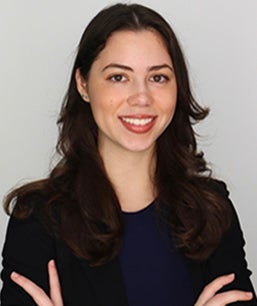
Larissa Todd’s research project is "Wampeters, Monads, and Granfalloons: An Investigation of Pluralism and Leibnizian Symbols in Kurt Vonnegut's Fiction."
Todd says the opportunity to be part of "a space where different academic fields are encouraged to bring new perspectives to the scholarly conversation" intrigued her.
She is pursuing her Honors in the Major thesis, and Todd sees her fellowship as reinforcing and strengthening her commitment to academia. During the academic year, like her undergraduate colleagues, Todd aims to connect with scholars across disciplines and build a meaningful community where everyone works toward the shared goal of academic enrichment in the humanities.
Noah Garry is a double major in English-Editing, Writing, Media, and in media communication studies.
Follow the English department: Instagram; Facebook; LinkedIn; X.